302/2
Serving Champagne Well: Temperature, Glassware, and Rituals that Respect the Wine
A bottle of Champagne often marks a moment: a birthday, a new job, a quiet Friday that deserves something special. It seems a shame to let the wine fall short because it…
A bottle of Champagne often marks a moment: a birthday, a new job, a quiet Friday that deserves something special. It seems a shame to let the wine fall short because it was too warm, too cold or poured into the wrong glass. None of the steps that make a difference are complicated. They simply take a little forethought.
Before the party: storage
Sparkling wine dislikes heat, light and movement. Keep bottles lying down in a cool, dark spot where the temperature stays fairly constant; a wardrobe floor away from radiators often works better than a kitchen shelf. If you buy a bottle on the day, carry it carefully and let it rest before opening, because a shaken bottle foams over and loses its bubbles.
Getting the temperature right
Champagne should be well chilled but not icy. Too cold, and the aromas shut down while the acidity tastes sharp; too warm, and the bubbles turn coarse and the alcohol becomes more noticeable. Lighter, younger styles suit a slightly colder serve, while fuller, older wines show more character a touch warmer. Two practical methods:
- Several hours in the fridge for a bottle you plan ahead for.
- A bucket of ice and water for about a quarter of an hour when time is short; the water chills the glass much faster than ice alone.
Avoid the freezer, which is easy to forget and can push the wine too far.
Choosing the glass
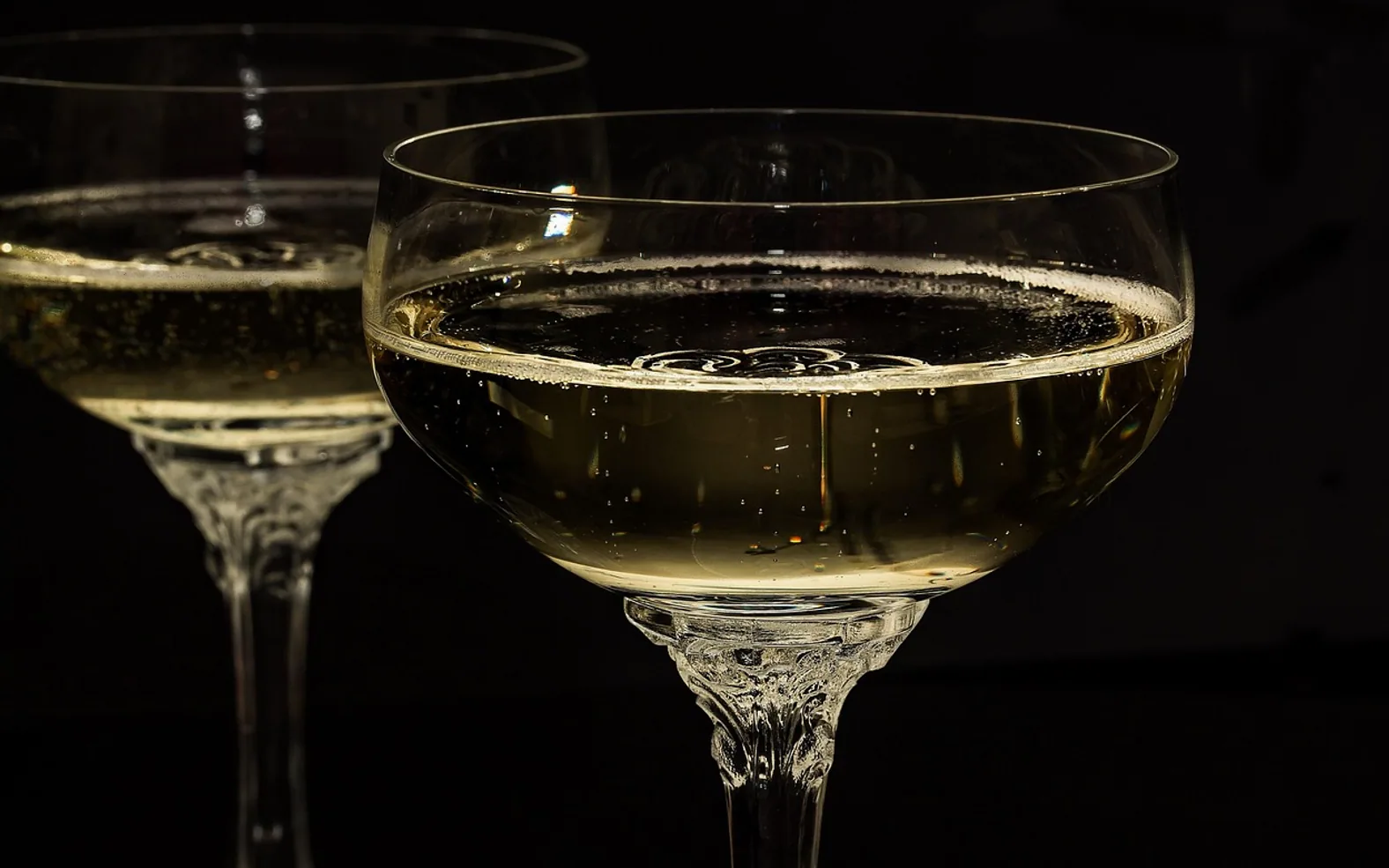
Tall, narrow flutes keep bubbles lively and look festive, but they leave little room for aroma. Many wine lovers now prefer a tulip-shaped glass, or even a standard white wine glass, which narrows at the top and lets the scent gather. The wide, shallow coupe is charming for a vintage-themed party, though the bubbles fade quickly. Make sure glasses are clean and rinsed of detergent, since residue flattens the mousse.
Opening and pouring with care
Remove the foil, loosen the wire cage and keep a thumb on the cork. Hold the bottle at an angle, grip the cork and turn the bottle rather than the cork, easing it out with a gentle sigh rather than a loud pop. Pour a small amount first, let the foam settle, then top up to around two-thirds full. Point the bottle away from people at every stage.
Rosé and food
Pink Champagne brings red-fruit notes and a little more body, which makes it a lovely partner for food. It works with salmon, roast chicken, charcuterie and berry desserts. For gatherings where rosé is the star, a selection of Roze champagne offers styles from delicate and fresh to rich and vinous, so you can match the bottle to the menu and the mood.
Finally, serve modest pours, offer water and soft drinks alongside, and make sure nobody who is driving feels pressed to drink. Treating the wine and the guests with care is the real ritual worth keeping.
Across the sections
Spotted a mistake?
A short note is enough.