473/7
How to Learn to Draw as an Adult
Drawing is not a gift you either have or lack. It is a handful of learnable skills, and adults bring patience and focus that make the early stages easier.
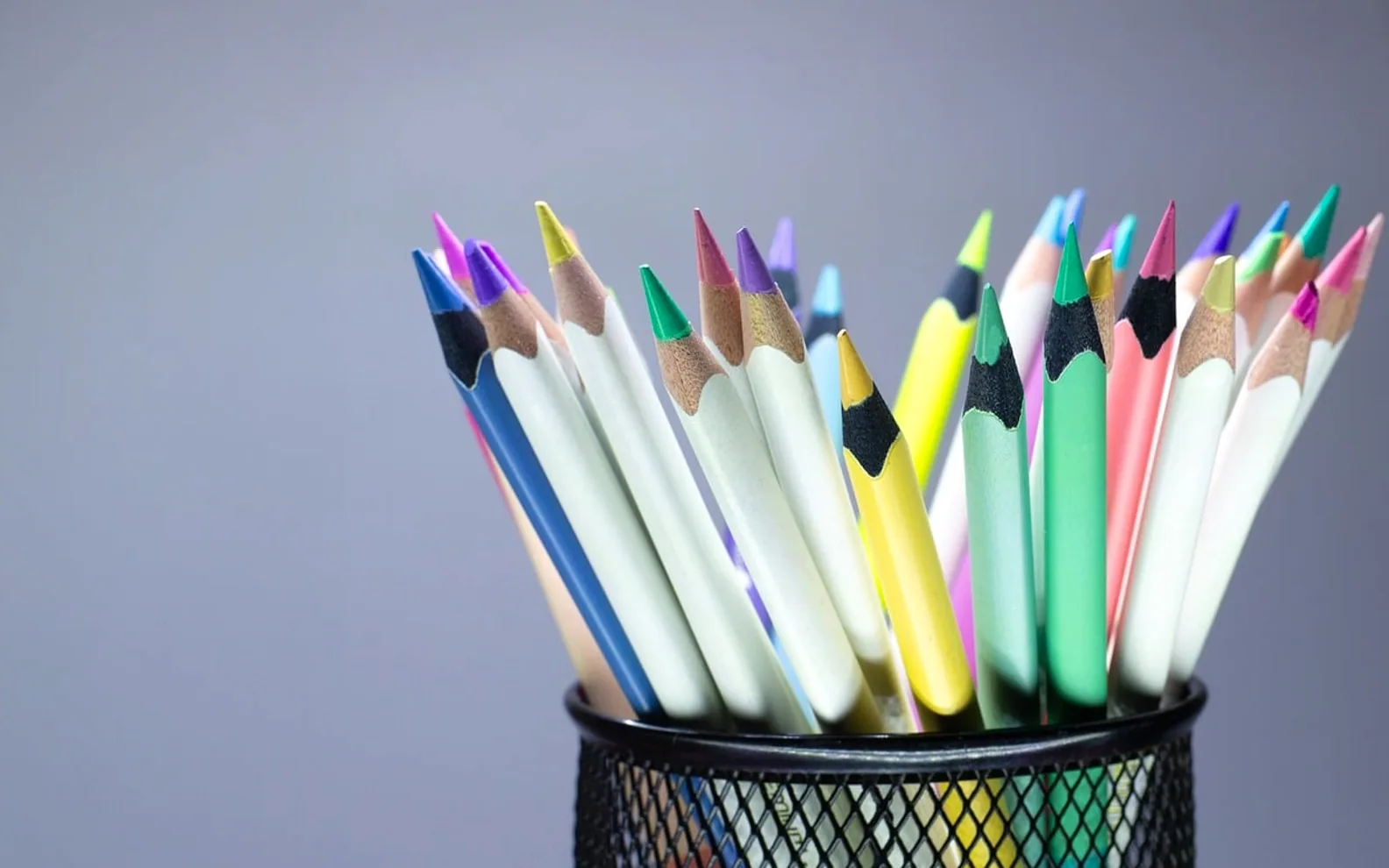
Plenty of adults say they "can't draw" as though it were a fixed trait, like eye color. In reality drawing is a bundle of skills: looking carefully, judging angles and proportions, controlling a line and understanding light. Every one of them improves with practice, at any age. Grown-ups even have a few advantages over children, including patience, the ability to follow a plan and a clearer sense of what they want to make.
Start with the right expectations
The first weeks are the hardest because your eye improves faster than your hand. You will spot what is wrong with a drawing before you know how to fix it. That gap is a sign of progress, not of missing talent. Expect wobbly lines and odd proportions for a while, and measure yourself by whether you sat down to draw, not by how the page looks.
Gather a simple kit
There is no need for a big art shop haul. A modest set-up lasts for months:
- Two graphite pencils, one harder and one softer (an HB alongside a 2B or 4B is a common pairing)
- A kneaded eraser, which lifts graphite without scuffing the paper
- An inexpensive sketchbook you will not mind filling with failed attempts
- A fineliner or ballpoint pen for confident line practice
- A sharpener or a craft knife
Hold off on premium materials until you know the hobby has stuck. Cheap paper invites experiments; precious paper makes people freeze.
Learn to see before you learn to shade
Most beginner drawings go astray because we draw what we believe an object looks like rather than what sits in front of us. A few classic exercises retrain that habit.
Blind contour drawing
Choose an object, such as your own hand or a houseplant, and trace its outline slowly without glancing at the paper. The result will look strange, but the exercise links eye and hand and teaches you to follow edges closely.
Negative space
Instead of drawing a chair, draw the shapes of empty space between its legs and rungs. Because those shapes have no name, your brain stops swapping in a symbol and simply records what it sees.
Sighting and measuring
Hold your pencil at arm's length, close one eye and use it to compare lengths and angles. How many heads tall is that figure? Does the table edge really slope as steeply as you drew it? This old method fixes a great many proportion problems.
Build the fundamentals in order
A loose sequence suits self-taught adults well:
- Lines and shapes. Fill pages with straight lines, ellipses and circles drawn from the shoulder rather than the wrist.
- Simple forms. Draw boxes, cylinders and spheres, then break everyday objects down into combinations of them.
- Light and shadow. Put an egg or a mug under a single lamp and practice shading from the brightest point to the darkest.
- Perspective basics. Learn one-point and two-point perspective with a few streets or room corners.
- Your chosen subject. Faces, animals, buildings, plants or comics: specialize once the basics feel familiar.
Make practice a habit, not an event
Short, frequent sessions beat occasional marathons. Fifteen or twenty minutes on most days builds more skill than one long Sunday afternoon. Some people carry a pocket sketchbook and draw a cup in a café or the view from a train window; others set a timer at the kitchen table each evening. Tying drawing to an existing routine, like the first coffee of the day, makes it easier to keep going. A sketchbook can double as a diary too, one of the approaches in our guide on starting a journal and sticking with it.
Use references, and copy on purpose
Drawing from life is the best teacher, but photographs and the work of artists you admire help as well. Copying a master drawing purely as a study, never as your own work for sale or display, reveals how experienced artists simplify forms and place shadows. Draw from your own photos when you can, since you will understand the scene better.
Find feedback and company
Learning alone is perfectly possible, but encouragement speeds things up. Options include evening classes at a community center, life drawing sessions, online courses with assignments or a friend who wants to learn alongside you. When asking for feedback, ask something specific, such as whether the proportions or the shading look off, rather than whether a drawing is "good".
Keep your old drawings
Date every page. After a few months, flip back to the start. The difference is usually encouraging, and it is a far more reliable guide than your mood on any given evening. If you would like to turn favorite line drawings into clean digital files, our article on converting images into SVG files walks through how that works.
Above all, enjoy the process
Drawing as an adult needs no goal beyond itself. It slows you down, sharpens how you notice the world and leaves you with something to show for a quiet half hour. Pick up a pencil, draw whatever is on the table in front of you and call it day one.
Across the sections
Spotted a mistake?
A short note is enough.